Research Summary
How do we feel? Every time we touch an object, reach out a limb, or sustain a physical injury, mechanical force is converted into an electrical signal by proteins within our sensory neurons. Different neuronal subtypes are tuned to detect different types and magnitudes of mechanical stimuli. Much of this diversity is thought to arise from the sensory end organs of these neurons, where the local cellular environment and accessory proteins shape how force is conveyed to the principal transduction molecules, PIEZO1 and PIEZO2. Yet, we know little about how this fundamental process works at a molecular level, or how altered transduction leads to pain and tactile dysfunction.
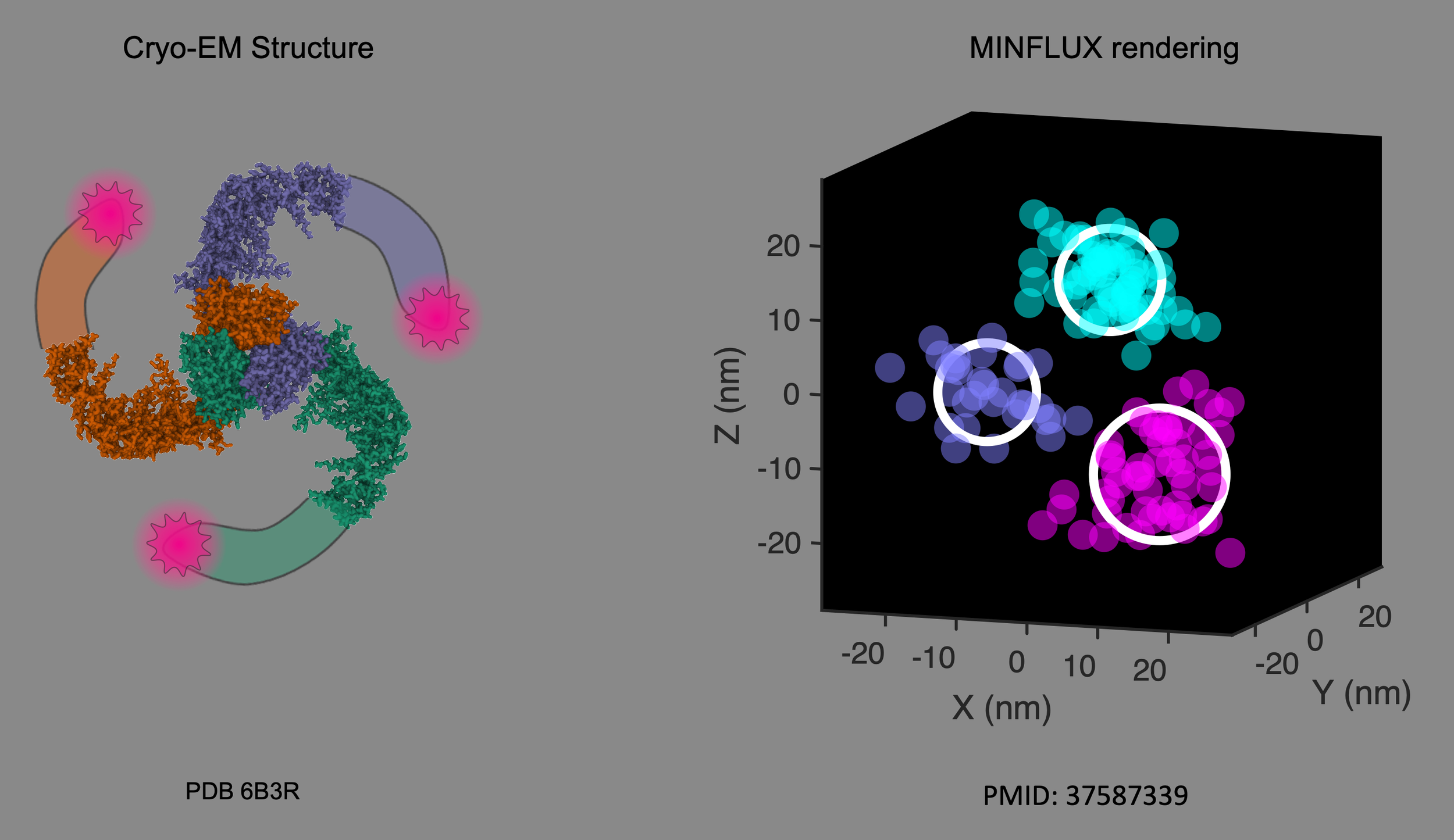
The goal of the Mulhall laboratory is to understand the molecular and cellular basis of this sensory specialization. We combine structural, biophysical, cellular, and physiological approaches to connect the molecular mechanisms of force transduction to somatosensation. A central tool is MINFLUX fluorescence nanoscopy, a type of in situ structural biology that resolves how proteins move inside cells with single-nanometer precision. We pair these structural measurements with functional assays such as electrophysiology and calcium imaging, and with mouse genetics and behavior to determine the physiological consequences.
Current projects address three big questions: how PIEZO channels detect and discriminate mechanical forces at a structural level, how tethering to the actin cytoskeleton through Filamin-B tunes PIEZO2 function across mechanoreceptor classes and disease states, and how additional accessory proteins within the PIEZO mechanotransduction complex tune force sensitivity in native sensory neurons.
Approaches
We use mechanistic, interdisciplinary approaches to study mechanosensation across biological scales:
MINFLUX fluorescence nanoscopy
Single-molecule biophysics
Molecular & cellular biology
Proteomics & molecular discovery
Electrophysiology
Mouse genetics and sensory physiology
Behavior